Recipe Selections
Learn more about B’teavon, a 4-day culinary exploration through the tastes, history, diversity and connections of all things Jewish food culture.

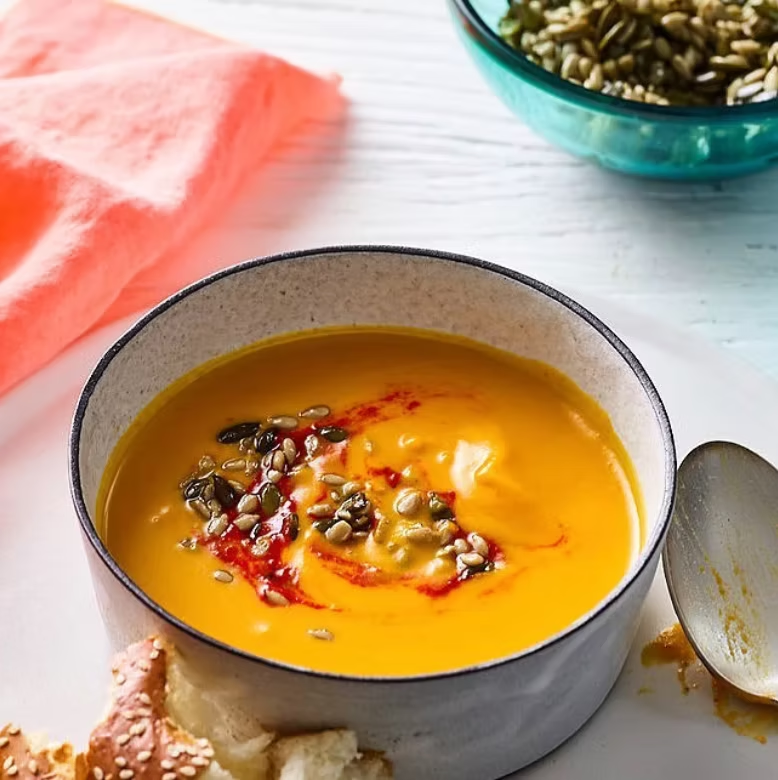
Orange Soup
This classic gives you latitude to mix and match carrots, butternut squash, sweet potatoes – whatever orange roots, squash, and spuds you have on hand. A little coconut milk, a crunchy nut topping, some spicy harissa swirled in…make a big pot because this one always disappears fast.
 Ingredients
- 3 tablespoons canola oil
- 1 large onion, diced
- 3 garlic cloves
- 6 cups peeled, chopped orange vegetables—any combination of carrot, sweet potatoes, pumpkin, butternut squash you like (about 2½ pounds total chopped)
- One 13.5-ounce can coconut milk, preferably full-fat
- 1 tablespoon honey
- 1 teaspoon kosher salt
- ½ teaspoon ground turmeric
- 3 tablespoons extra-virgin olive oil
- ½ cup shelled pumpkin seeds (pepitas)
- ½ cup shelled sunflower seeds
- 2 tablespoons sesame seeds
- Kosher salt and freshly ground black pepper to taste
- Honey Harissa
Instructions
Make the soup: Heat the oil in a large (at least 4-quart) saucepan over medium heat. Add the onions and garlic and cook, stirring, until golden and slightly softened, 8 to 9 minutes. Add the orange vegetables and cook, stirring, until they begin to soften, 5 minutes. Add the coconut milk, 1¾ cups (one filled empty can’s worth) water, honey, salt, and turmeric; bring to a boil, reduce the heat, and simmer until the vegetables are tender, 25 to 30 minutes. Cool slightly, transfer to a blender (or use an immersion blender or food processor), and puree until smooth, 30 seconds.
Make the topping: Heat the oil in a medium skillet over medium heat. Add the pumpkin seeds, sunflower seeds, and sesame seeds and cook, stirring, until they begin to turn golden and a few crackle or pop, 3 to 4 minutes. Drain on paper towels and season with salt and pepper.
Divide the soup among bowls, swirl each bowl with harissa, and garnish with the seeds. Extra topping will keep in an airtight container for up to 2 weeks.
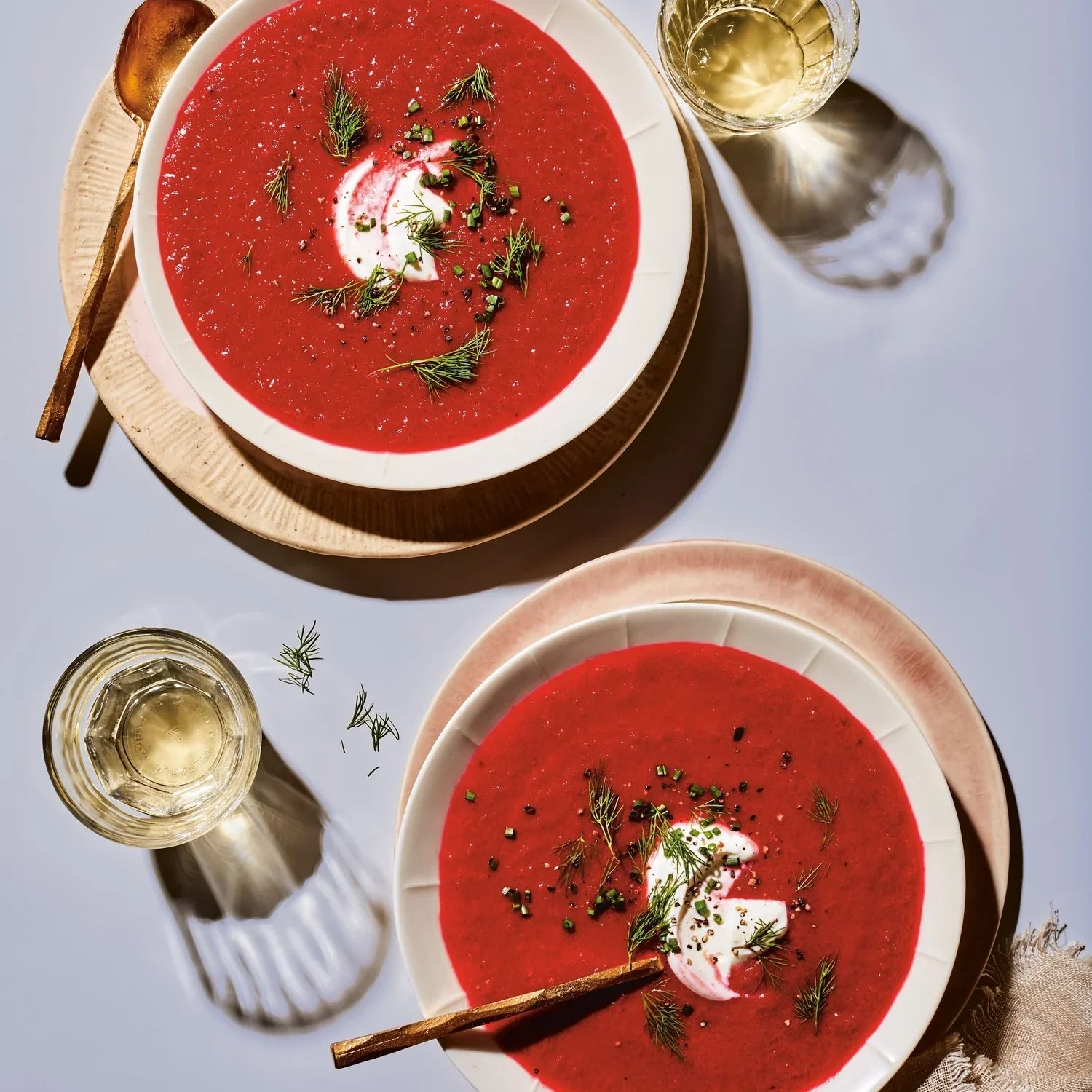
Seasonal Beet Borscht
Serving Size: Serves 8
- 4 medium tomatoes
- 3 tbsp. olive oil, butter, or schmaltz (rendered chicken fat)
- 2 medium yellow onions, sliced
- 2 medium carrots, chopped
- 4 celery stalks, chopped
- 1½ lbs. red beets, peeled and chopped (about 3¾ cups)
- 8 cups chicken, vegetable, or beef broth
- 3 garlic cloves, smashed
- 2 dried bay leaves
- 2 tbsp. whole black peppercorns
- 2 tbsp. caraway seeds
- 2 tbsp. apple cider vinegar
- kosher salt
- sour cream, minced fresh chives, and chopped fresh dill
Note: Prepare this borscht a day ahead if possible, since this soup, like most others, will taste even better the next day.
Instructions
- Bring a small pot of water to a boil. Prepare an ice bath in a medium bowl.
- Score the bottoms of the tomatoes with an X, then add to the boiling water and cook for about 60 seconds, until the skins start to curl. Transfer the tomatoes to the ice bath. Once cool enough to handle, peel and chop the tomatoes, discarding the skins and seeds.
- In a large pot, heat the olive oil over medium heat. When the oil is shimmering, add the onions and cook until golden brown, about 10 minutes. Add the carrots, celery, and beets and continue to cook until the vegetables have softened, another 10 minutes. Stir in the tomatoes and broth, using a wooden spoon to scrape up any bits stuck to the bottom of the pan. Bring to a boil.
- While the soup is coming to a boil, gather the garlic, bay leaves, black peppercorns, and caraway seeds in a square of cheesecloth and tie into a bundle with kitchen twine.
- Drop the cheesecloth bundle into the soup, then reduce the heat to low. Cover and simmer for about 1 hour, until the vegetables are fork-tender.
- Remove the pot from the heat. Remove and discard the spice bundle. Purée the soup with an immersion blender to your desired consistency. Add the vinegar, 1 tablespoon at a time, and stir to combine. Season to taste with salt.
- Ladle the soup into bowls. Serve with a generous dollop of sour cream and a sprinkling of chives and dill.
This recipe originally published in TASTY PRIDE: 75 Recipes And Stories From The Queer Food Community by Jesse Szewczyk (Penguin Random House).
Photography by Lauren Volo.
Pumpkin Kugel with Pecan Streusel
Serves: 6
On the table in… 1 hour 10 minutes
Vegan
Gluten-free
 Kugel is Yiddish for “pudding.” By definition, kugel is a starchy, baked pudding that contains fat and typically eggs. This version relies on cornstarch for its starch component and rich coconut milk for an ultra-creamy texture. It is anything but traditional, with a soufflé, pudding-like texture that is a mash-up of a sweet potato casserole, kugel, and pumpkin pie. Made with warm spices and topped with a sweet and crunchy pecan streusel, it’s a good choice to serve at an autumn Shabbat dinner, Sukkot, or Thanksgiving.
Kugel
- 1 (29-oz) can pumpkin puree
- 1 cup canned coconut cream, at room temperature
- ⅔ cup brown sugar or coconut sugar
- 1½ teaspoons ground cinnamon
- 1½ teaspoons ground ginger
- ½ teaspoon ground cardamom
- ⅛ teaspoon ground cloves
- ½ teaspoon sea salt
- ¼ cup cornstarch or potato starch
- ½ teaspoon baking powder
Pecan topping
- 1 cup raw pecans, roughly chopped
- ¼ cup all-purpose flour, gluten-free, if preferred
- 3 tablespoons brown sugar or coconut sugar
- 3 tablespoons coconut oil, melted
- ½ teaspoon ground cinnamon
- ¼ teaspoon ground ginger
Whipped cream or vegan whipped cream, for serving (optional)
Make the Kugel
Preheat the oven to 350°F. Generously grease an 8-inch pie dish with cooking spray or coconut oil.
In a medium bowl, whisk together the pumpkin puree, coconut cream, brown sugar, cinnamon, ginger, cardamom, cloves, salt, cornstarch, and baking powder. Pour the pumpkin mixture into the greased pie dish.
Make the Topping
In a bowl, combine the pecans, flour, brown sugar, coconut oil, cinnamon, and ginger and mix well. Spread evenly over the kugel.
Bake for 1 hour, or until set. Let cool slightly (it will firm up while cooling).
Top the kugel with whipped cream before serving, if desired.
Note: Tightly wrap the kugel (in the pan) with plastic wrap and store in the refrigerator for up to 4 days. To freeze, let cool completely, wrap in a layer of plastic wrap and foil, and freeze for up to 3 months. Reheat in the microwave or the oven at 350°F until heated through.
Variation: Use 2½ teaspoons Kafe Hawaij seasoning or pumpkin pie spice in place of the cinnamon, ginger, cardamom, and cloves. If you prefer a less-sweet dish, decrease the sugar to ½ cup.
Substitution: Use tapioca starch in place of the cornstarch, if preferred.
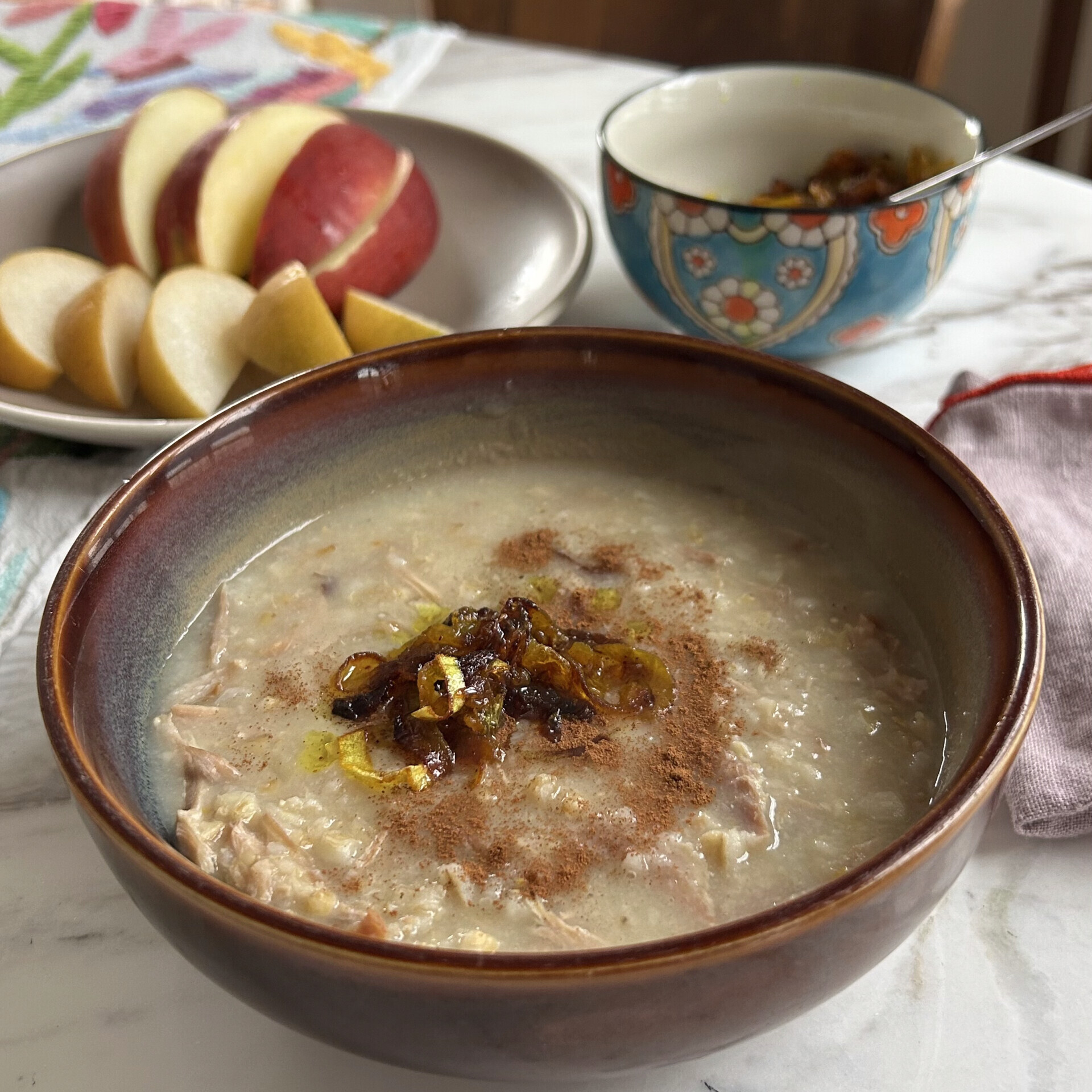
Leftover Turkey Halim
 As new immigrants from Iran, my family’s Thanksgiving dinners in the early 80’s were a bit unconventional. As the centerpiece of our feast, my mom would make halim, a hearty breakfast porridge with shredded meat and whole wheat kernels. To her, the logic was sound—after all, she made it with turkey.
Eventually, we figured it out, and of course my mother’s roasted turkey, with quince and saffron and lots of saffron, took it to the next level. But I believe the real move is to make halim with your leftover turkey after Thanksgiving. It’s a warm, hearty dish that will keep you well-fed throughout the autumn. The pot simmering on the fire will make the house cozy. And while it’s traditional to eat it for breakfast, the savory dish is good for any meal.
This recipe is extremely forgiving, as long as the basics are there: a good broth, some long cooked grains, and your turkey. If you don’t feel like building a broth, you can use chicken broth, or even a well-seasoned mix of chicken broth and water. Our family makes halim with wheat, barley, and rice, but many recipes use only wheat, and I’ve even seen it made with oatmeal. Farro or bulgur could also work, just be sure to cook them long enough to soften them. You can do a long simmer in a slow cooker, or bring it together quickly in a pressure cooker.
In non-Jewish households, halim is sometimes eaten with a pat of butter or even milk in the cooking liquid. In our family, we add piaz dagh—caramelized onions with turmeric and a bit of saffron—and I think that’s even better.
About 1 lb cooked turkey meat, removed from the bone and shredded, bones and any delicious pan drippings, onions, etc. reserved
- 1 cup wheat for halim (See note)
- ½ cup pearled barley
- ¼ cup basmati rice
- 1 medium onion, diced finely
- 2 bay leaves
- salt (See note)
- ½ tsp black pepper
For piaz dagh:
- 2 Tbsp neutral oil (such as grapeseed)
- 1 medium onion, sliced into thin semicircles
- 1 teaspoon ground turmeric
- pinch of saffron, optional
- salt and pepper to taste
- Cinnamon and powdered sugar to garnish
Soak grains: Add wheat, barley, and rice to a bowl. Cover with water, claw through with fingers, and drain water. Repeat two more times. Cover grains with about one inch of water and set aside to soak for at least 1 hour, up to 24.
Make the broth: If you have small turkey bones, tie them in a bundle with cheesecloth or tie them together securely with kitchen twine. In a large pot, add bones and pan drippings from turkey. Chop up onions from roasting pan and add them, if using. Add 5 cups of water. Add diced onion, bay leaves, salt, and black pepper. Stir to combine and bring to a boil. Lower heat and simmer, covered, for at least one hour.
Taste broth and adjust seasonings.
Add shredded turkey meat and grains with their soaking liquid to pot; stir to combine. Increase heat and bring back up to a boil. Again, lower heat and simmer covered for one hour, or until grains are fully cooked and soft under the tooth. Check on the halim every 10-15 minutes: if it gets too thick or the bottom starts to burn, add water, about ¼ cup at a time. Remove bones and bay leaves. Taste and adjust seasonings.
In the meantime, make piaz dagh: In a skillet over medium heat, add oil, sliced onions, turmeric, and optionally, saffron. Cook down, stirring occasionally, but allowing some browning to occur, until fully softened and golden in color with some browned areas, about 15 minutes. Lower heat if onions start to burn. Add salt and pepper to taste.
To serve, garnish hot halim with powdered sugar, cinnamon, and piaz dagh with its golden oil.
Note on grains: Halim is traditionally made with wheat, and you can usually find it at Middle Eastern or Indian markets labeled as “cracked wheat”, “pelted wheat”, “broken wheat”, or even “haleem wheat”. Some households use bulgur as an alternative, or even oatmeal!
Note on salt: The amount of salt you need will vary based on how salty your turkey is. It will also change as you reheat your halim, potentially adding water, as it stiffens when cool. Start with one teaspoon, but taste and adjust before serving, and again each time you reheat.
Pine Mushroom & Egg Barley
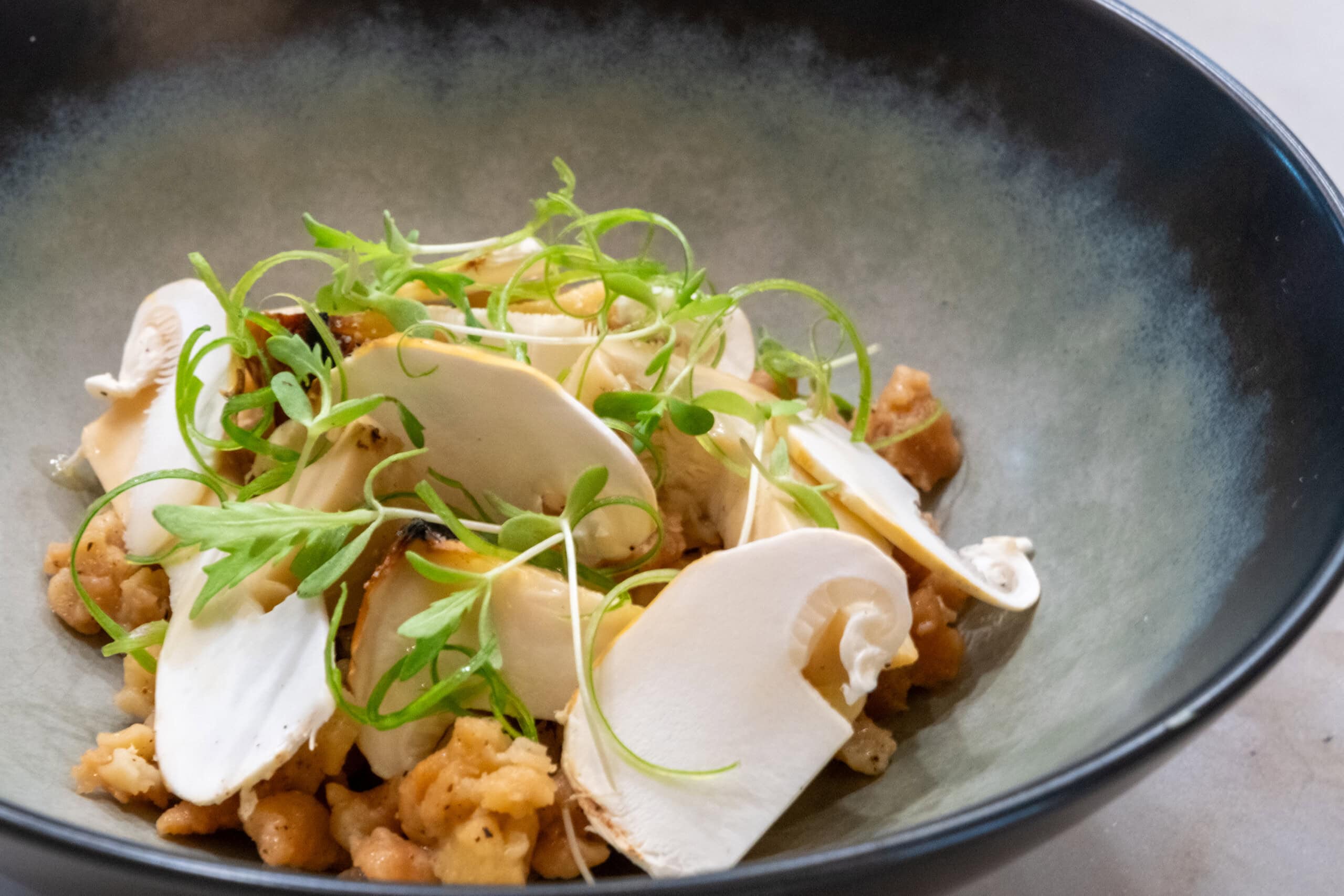
Ian’s culinary POV melds his Ashkenazi heritage with his home in Appalachia through storied dishes, modern techniques, and ingredients sourced from the local purveyors he has been supporting for decades. A recent menu addition at Maude & the Bear is Ian’s Pine Mushroom & Egg Barley – a dish reminiscent of his Grandma Pauline, whose apartment always smelled of Schmaltz, regardless of if she was cooking with it. However, Ian’s Egg Barley is not only cooked in Schmaltz but also nostalgia – both of which are synonymous in Ian’s mind.
The dish is the epitome of classic Ashkenazi comfort: made from a simple egg-enriched dough that is grated and toasted in the oven to create a golden, barley-shaped pasta. The pasta is then simmered in schmaltz, onions, garlic, and chicken stock and topped with thin pine (matsutake) mushroom for a rich, layered, savory dish that bridges tradition with modern technique and influence.
Recipe coming soon!